
Midland County Projected Versus Actual Release
A projected date is an estimate, eligibility point, or calculated sentence milestone. It is not the same as the physical release event. Michigan's OTIS system uses specific terms instead of one universal projected-release label. Earliest Release Date marks the first point when the Parole Board may obtain jurisdiction under the sentence and credit rules. Maximum Discharge marks the maximum-term endpoint. Date Paroled and a current Parolee status are stronger proof that a state prisoner left prison for community supervision.
County custody works differently. A pretrial detainee at Midland County Jail has no fixed sentence end to calculate. Release may depend on bond being posted, dismissal, a new order, or resolution of another hold. A sentenced jail inmate may have a computed end date, but the public county pages do not publish a calculator, a local good-time formula, or a set release schedule. The jail's operational record is required for the actual exit.
Find Midland County Projected Release Dates
Begin with the last known custodian. Midland County Jail, MDOC, the federal Bureau of Prisons, and immigration custody keep different date records. A county booking number does not work as an MDOC number. OTIS does not include a person held only in the Midland jail or serving only a county-jail term. Matching the system to the sentence prevents the most common false result.
- Identify whether the person is awaiting court, serving a Midland jail sentence, serving an MDOC prison term, or held by a federal custodian.
- For MDOC, open OTIS. Search the six-digit offender number when known, or use the name and added identity fields.
- Open the matched detail and copy the exact labels: Earliest Release Date, Date Paroled, Maximum Discharge, and current status.
- For a county sentence, obtain the judgment from the 75th District or 42nd Circuit Court and ask Midland County Jail for its recorded computation.
- For an actual event, request the booking/release record or confirm Date Paroled and current status. Do not turn an estimate into an exit date.
The official OTIS scope and warning are shown on the MDOC search information page. Its caution matters because the displayed information may not reflect a current location or later change.
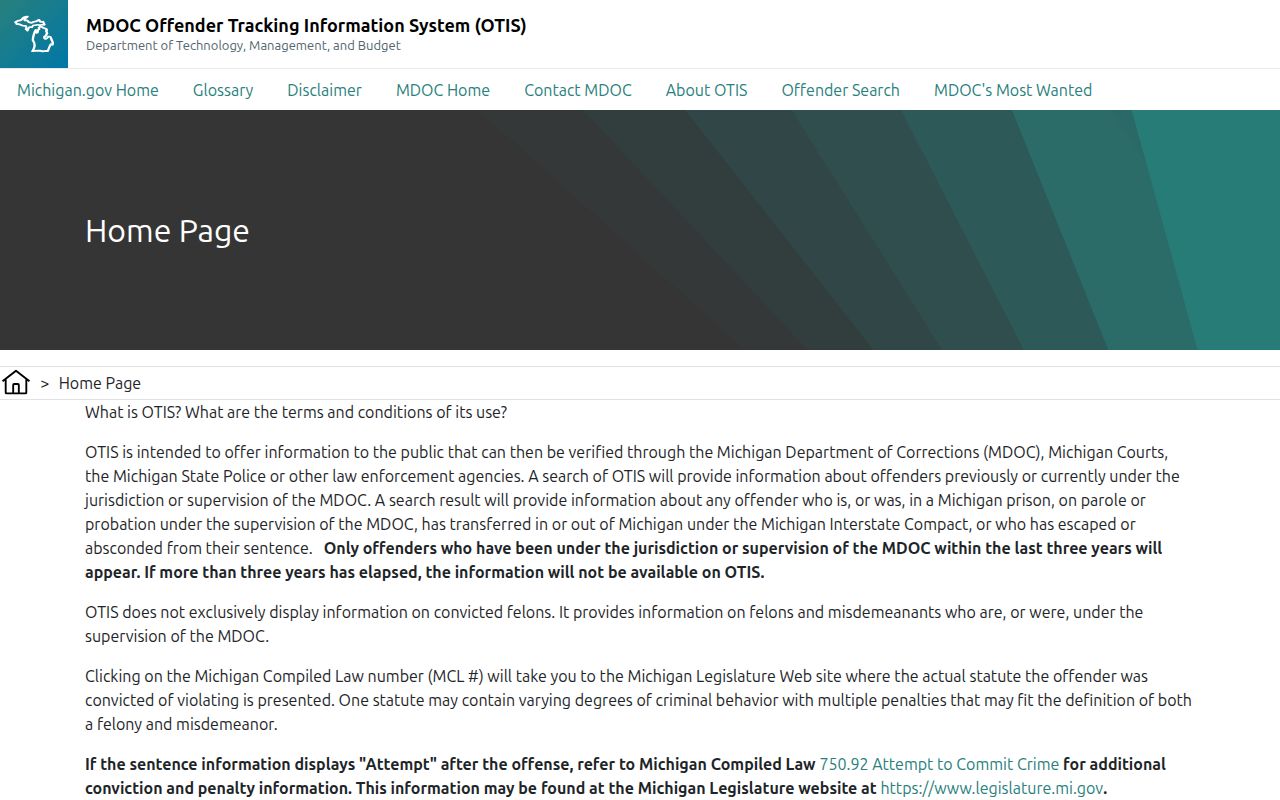
The image supports using OTIS as an MDOC record source, not as a Midland jail calculator. A zero result cannot establish that no county custody or release occurred.
Midland County Release Date Fields
Michigan uses indeterminate sentencing for the records at issue. The court sets a minimum and maximum within the law. The minimum is tied to when the Parole Board may gain jurisdiction, while the maximum marks the sentence endpoint. Because these terms answer different questions, copying only one date can create a false promise about release.
| OTIS field | What it means | What it does not prove |
|---|---|---|
| Earliest Release Date | First parole-eligibility point under the applicable sentence rules | That parole was granted or the person left prison |
| Date Paroled | Recorded date of departure from prison or camp into parole | That supervision later ended or no other case exists |
| Maximum Discharge | Maximum-term endpoint under MDOC's explanation | That custody continued until that date in every case |
| Parolee | Person is in the community under MDOC parole supervision | That the person is fully discharged |
| Discharged | MDOC jurisdiction or supervision ended | That no later county, federal, or other custody exists |
MDOC's official frequently asked questions explain these labels. The source screenshot below shows the state definitions in the correct records context.
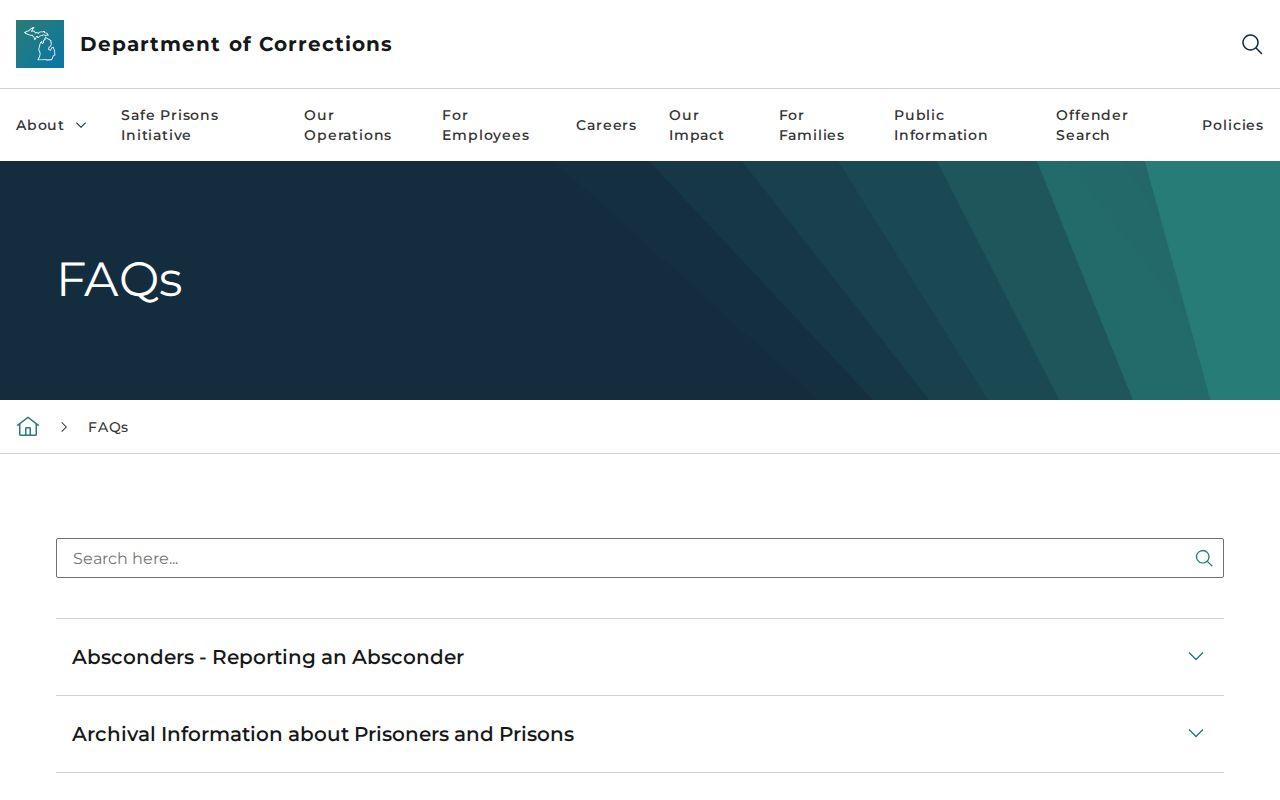
Preserve the label and retrieval date when saving a result. Do not add a time of day to a date-only value or assume that a batch update happened at midnight.
Michigan Truth-in-Sentencing Release Rule
Michigan's rule corrects a common but inaccurate shortcut. For covered truth-in-sentencing offenses, MDOC does not say a person serves about 85 percent of the term. The state says the person must serve 100 percent of the judicial minimum before parole consideration. Covered assaultive offenses apply from December 15, 1998, and other covered crimes from December 15, 2000.
That minimum is still not an automatic release date. It marks the point when the Board may act under the applicable law. Class 1 misconduct can add disciplinary time that the Board must consider, but it is not a credit that permits release before the minimum. MCL 791.234 governs Parole Board jurisdiction and includes the disciplinary-time rule.
The official Michigan truth-in-sentencing explanation is the best source for the 100-percent rule.
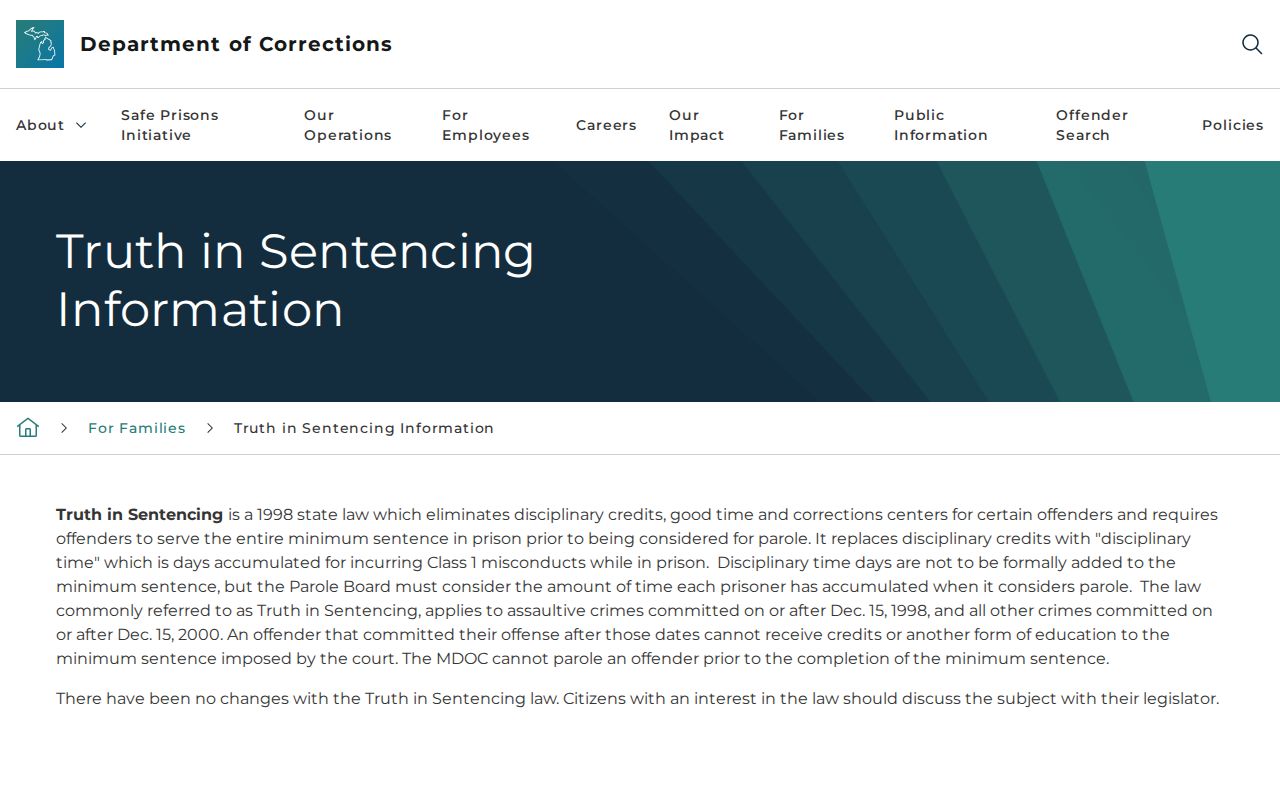
The state wording shown in the image should replace any generic percentage formula. Sentence and offense dates still control which framework applies.
Midland County Legacy Release Credits
Older Michigan offenses can fall under legacy good-time or disciplinary-credit statutes. MCL 800.33, MCL 800.34, and MCL 800.35 address the applicable credit and disciplinary-time rules. These provisions cannot be reduced to one rate for every person.
MDOC's glossary explains that eligible older disciplinary credits could include five days per month plus up to two extra days for exceptional conduct, capped at 84 days per year. Crimes after April 1, 1987 do not earn the old good-time form. Later truth-in-sentencing dates ended disciplinary-credit eligibility for covered offenses. The offense date, conviction, sentence structure, and governing statute all matter.
No one should calculate a Midland County release date by applying a flat percentage to the maximum term. Consecutive sentences can also change the sequence. Certain life sentences are nonparolable, while parolable-life rules have date-based provisions and exceptions. The statute and MDOC record must be read together.
Note: Legacy credit rules are date and offense specific, so an online estimate should never replace the MDOC sentence record.
Midland County Jail Release Calculations
OTIS does not calculate a sentence served only at Midland County Jail. For that case, use the court judgment, the jail's sentence computation, any bond or later court order, and the operational release record. All Midland prosecutions begin in the 75th District Court. Misdemeanors remain there, while a felony bound over after preliminary examination proceeds in the 42nd Circuit Court.
The county research found no published jail good-time formula, weekend-release statute summary, public computation tool, or fixed release-time schedule. That negative finding is important. MDOC prison rules must not be imported into a county sentence. Ask the jail at 989-832-6612 for the recorded release computation and use a narrow records request when documentary proof is needed.
A pretrial case is different again. Bond set does not mean bond posted. Dismissal of one case does not end another hold. If a name leaves the current roster, the event could be release or transfer. The Midland County release-record process shows how to request the booking number, actual release date and time, disposition, and receiving agency when recorded and disclosable.
When requesting the county computation, give the full name, date of birth when known, booking number, sentencing court, case number, and a narrow date range. Ask for existing custody-history entries and the actual recorded release time. The Sheriff's Jail Records Division maintains jail documentation, while the 75th District or 42nd Circuit clerk holds the judgment. Those sources should be compared because a court event may precede physical processing.
Why Midland County Release Dates Change
A future date can move because the source is an eligibility point, not an order. It can also change when sentence data are corrected, consecutive terms apply, legacy credits or disciplinary time are recalculated, or the Parole Board receives new information before departure. Another agency's detainer may cause a transfer instead of community release.
| Factor | Possible effect | Verification source |
|---|---|---|
| Eligibility, not approval | Earliest Release Date passes without parole | Current OTIS status and Parole Board record |
| Sentence correction | Minimum or maximum calculation changes | Sentencing court and MDOC |
| Consecutive terms | One term follows another | Judgments and MDOC computation |
| Disciplinary time | Board considers added time or adverse conduct | MDOC record and governing law |
| Parole suspension | Grant may not lead to departure as first expected | Board action and current status |
| Detainer or hold | Person moves to another custodian | Release record and receiving agency |
Record the source and retrieval date for each value. If two systems conflict, favor the newest record from the agency that physically held the person and ask that custodian to reconcile the difference.
Confirm Midland County Actual Release
Actual release needs an event record. For MDOC, check Date Paroled and the current status, or seek a discharge record. For Midland County Jail, request the booking/release sheet and custody history. A court docket explains the legal authority for bond, dismissal, sentence, or commitment, but its event time may differ from the moment jail staff completed physical processing.
Michigan VINE may send a custody-change notice when a qualifying record is present. Register before the expected event when possible, then compare the notice with the custodian's record. The dedicated VINELink Inmate Search instructions explain state selection, identity matching, and alert limits. A notice can reflect a transfer, so it is not proof of unrestricted community release.
Maximum Discharge, Discharged, and Date Paroled should never be treated as synonyms. The first is a sentence endpoint, the second ends MDOC jurisdiction, and the third records prison departure into parole. Keeping those labels intact is the safest way to answer when someone may leave and when they actually did.
For an older state record no longer displayed in OTIS, MDOC accepts a focused FOIA request for records such as a discharge certificate, Basic Information Sheet, or date-paroled status record. The agency also lists a records-retention contact for past-prisoner questions up to six years after release. For a county-jail-only case, use Midland's NextRequest portal instead. Custodian choice is part of the answer.
Note: A projected date becomes release proof only after the responsible custodian records the actual departure or discharge event.